

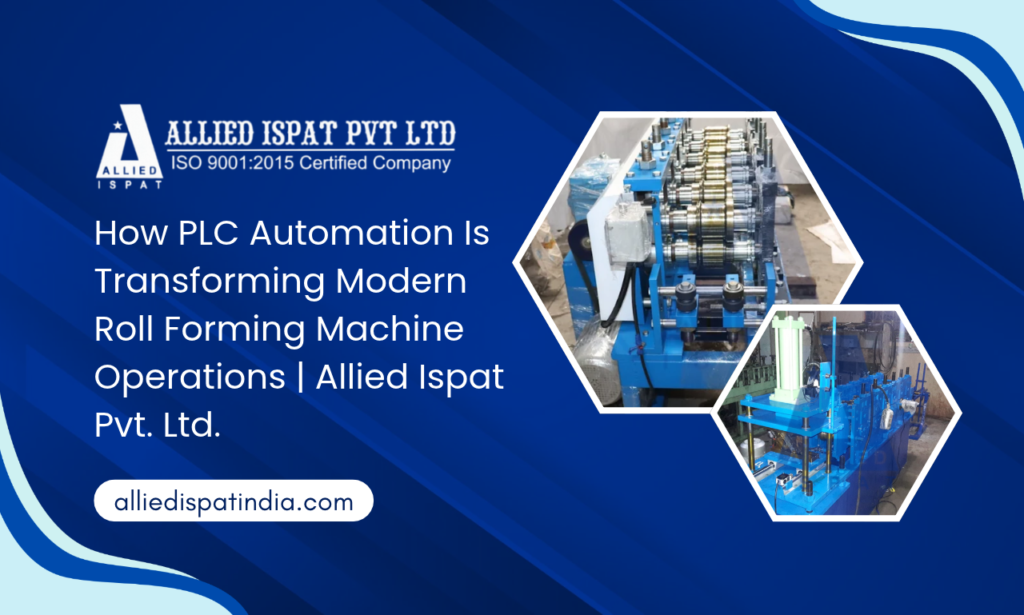
Introduction: How Smart Automation Is Redefining Precision and Productivity in Roll Forming Machine
The steel manufacturing industry is evolving rapidly as industrial businesses demand greater production efficiency, consistent product quality and advanced manufacturing capabilities. From rolling shutter components and false ceiling sections to customized industrial metal profiles, roll forming machines have become essential equipment in modern metal fabrication. However, as production volumes increase and dimensional accuracy becomes more critical, traditional manufacturing processes are giving way to smarter, automated solutions that offer better control, improved repeatability and streamlined operations.
Allied Ispat Pvt. Ltd., part of the Malik Group of Companies, is a trusted Roll Forming Machine Manufacturer in India, offering precision-engineered machinery designed to meet diverse industrial manufacturing requirements. With a strong focus on heavy-duty construction, innovative engineering and customizable machine configurations, the company supports manufacturers seeking dependable and efficient metal forming solutions.
One of the most significant technological advancements driving this transformation is PLC Automation in Roll Forming Machines. By integrating Programmable Logic Controllers with advanced sensors, machine drives and Human-Machine Interfaces (HMIs), manufacturers can automate production sequences, improve cutting consistency, monitor machine operations and reduce repetitive manual intervention.
For businesses searching for a Roll Forming Machine Manufacturer in Mumbai, understanding the advantages of PLC-controlled machinery is essential for selecting equipment that meets evolving production requirements. Partnering with an experienced Roll Forming Machine Supplier in India can also help manufacturers identify suitable automation features, machine configurations and technical specifications.
As industrial automation continues to advance, PLC technology is becoming an important part of modern roll forming operations. Let’s explore how this technology works and why it matters for the future of precision metal manufacturing.
PLC Automation in Roll Forming Machines: The Technology Behind Smarter Steel Manufacturing
PLC Automation in Roll Forming Machines is transforming how manufacturers control, monitor and coordinate sheet metal forming operations. A Programmable Logic Controller (PLC) is an industrial control system that receives information from sensors and operator inputs, processes programmed instructions and sends commands to connected machinery. By automating selected production functions, PLC technology helps manufacturers achieve consistent operating sequences, improve process coordination and minimise repetitive manual adjustments.
In a conventional roll forming process, metal strips travel through multiple forming stations, where precision-designed rollers gradually shape the material into the required profile. While the rollers perform the actual metal forming, the PLC coordinates compatible machine drives, feeding equipment, measuring systems and cutting mechanisms. This combination of mechanical engineering and automated control supports more organised and repeatable manufacturing operations.
How Does a PLC Control a Roll Forming Machine? Key Functions Explained
- Smart Material Feeding Control: The PLC coordinates compatible feeding equipment and machine drives to support a controlled material movement sequence throughout production.
- Real-Time Sensor Monitoring: Proximity sensors, limit switches and other input devices communicate machine conditions and component positions to the controller.
- Precision Length Measurement: Encoder-based measuring systems track material movement and provide information for programmed cut-to-length operations.
- Coordinated Roll Forming Operations: The PLC manages relevant machine commands while forming rollers progressively shape the metal strip into the required profile.
- Automated Hydraulic Cutting: Once the programmed material length is reached, the PLC initiates the appropriate hydraulic cutting sequence according to the machine configuration.
- User-Friendly HMI Controls: Human-Machine Interfaces allow operators to enter production lengths, set quantities, monitor operating status and access available machine functions.
- Intelligent Fault Detection: Configured control logic can identify selected abnormal operating conditions and display alarms or initiate protective responses.
From Steel Coil to Finished Profile: How PLC Automation Streamlines Production
A PLC-controlled roll forming machine follows a programmed production sequence designed to coordinate material movement, forming and cutting operations.
The process begins when the operator enters the required product length, production quantity and other relevant parameters through the HMI. Once the machine’s operating conditions are confirmed, the metal strip moves through a series of precision-engineered forming rollers, gradually achieving the required shape.
During production, an encoder or suitable measuring system tracks material movement and communicates the information to the PLC. When the programmed length is reached, the controller initiates the cutting sequence. Depending on the machine design, production either pauses during cutting or continues through a synchronized arrangement.
This automated coordination can improve production consistency and reduce errors associated with repetitive manual measurements. However, accurate results still depend on proper tooling alignment, sensor calibration, material quality and regular machine maintenance.
For industrial businesses looking for a Roll Forming Machine Manufacturer in India, understanding these automation capabilities is essential. Allied Ispat Pvt. Ltd. focuses on precision engineering, durable machine construction and configurable roll forming solutions to support modern metal fabrication requirements.
Why PLC Automation Is Becoming Essential for Modern Roll Forming Manufacturers
As industrial manufacturing becomes more competitive, businesses are looking for smarter ways to improve production efficiency, maintain consistent product quality and reduce operational interruptions. Traditional roll forming systems often require frequent manual adjustments, measurements and operator involvement, which can affect productivity during high-volume manufacturing. PLC Automation in Roll Forming Machines helps address these challenges by introducing programmable controls, automated production sequences and improved process coordination, allowing manufacturers to manage operations with greater accuracy and consistency.
Reasons to Manufacturers Are Switching to PLC-Automated Roll Forming Machines
– Less Manual Work, Greater Productivity: Automated operating sequences reduce repetitive manual tasks, allowing operators to focus on production monitoring and quality control.
– Consistent Quality Across Every Batch: Pre-programmed settings help maintain repeatable production conditions and minimise variations between manufacturing batches.
– Smarter Batch Production Management: PLC-controlled systems allow operators to enter specific product lengths and quantities, simplifying the management of different production orders.
– Seamless Coordination from Feeding to Cutting: Integrated control logic coordinates material feeding, forming, measurement and cutting operations for a more organised manufacturing workflow.
– Fewer Human Errors, Better Process Accuracy: Automated commands reduce inconsistencies associated with repetitive manual adjustments and cutting operations.
– Real-Time Monitoring for Better Decisions: Human-Machine Interfaces (HMIs) can display production counts, machine status and fault alerts, helping operators monitor performance.
– Faster Changeovers, More Flexible Manufacturing: Where supported, stored production settings simplify switching between different product lengths and repeat manufacturing orders.
How PLC Automation Is Helping Indian Metal Fabricators Stay Production-Ready
India’s expanding construction, infrastructure and industrial manufacturing sectors require steel components with consistent dimensions and reliable quality. Manufacturers producing rolling shutter parts, false ceiling sections, drywall partition profiles and industrial channels often need to handle varying order quantities and product specifications.
For example, a ceiling section manufacturer producing multiple profile lengths can use a suitable PLC-controlled roll forming machine to automate length measurement and cutting sequences. This helps reduce repetitive manual measurements while supporting more consistent batch production.
However, successful automation also depends on proper machine calibration, precision tooling, material compatibility, skilled operators and regular preventive maintenance.
As a result, choosing an experienced Roll Forming Machine Supplier in India becomes important for businesses planning to modernise their production facilities. Allied Ispat Pvt. Ltd. offers industrial roll forming solutions focused on precision engineering, durable machine construction and configurable automation options, helping manufacturers select equipment suited to their production requirements.
How PLC Automation Boosts Precision, Productivity and Manufacturing Efficiency
Modern industrial manufacturing demands accuracy, consistent quality and efficient production control. PLC Automation in Roll Forming Machines supports these requirements by coordinating measurement, machine operations and cutting processes. However, overall performance depends on machine design, material quality, tooling condition, calibration and control-system configuration.
Benefits of PLC Automation in Roll Forming Machine
1. Precision in Every Cut: Encoder-based measurement and programmed cutting sequences help maintain consistent finished lengths with proper calibration.
2. Automated Cutting, Greater Efficiency: PLC systems initiate cutting commands based on measured material movement and programmed lengths.
3. Smooth and Consistent Production: Coordinated machine operations help minimise unnecessary interruptions between forming and cutting stages.
4. Less Waste, Better Material Utilisation: Accurate settings and reliable measurements help reduce cutting errors and off-length components.
5. Smarter Production Control: Operators can monitor machine conditions and adjust permitted production settings through the HMI.
6. Consistent Quality Across Every Batch: Standardised settings support repeatable production for similar length and quantity requirements.
7. Faster Fault Identification: Configured alarms and status indicators help maintenance teams identify operational issues.
Precision in Every Cut: How Does PLC Automation Improve Cutting Accuracy?
In automated cut-to-length systems, an encoder measures material movement and sends signals to the PLC. The controller compares the measured distance with the programmed length and initiates the cutting sequence.
Depending on machine design, the control programme may account for cutting response and stopping distance. Proper calibration remains essential because measurement-wheel slippage, mechanical backlash and variations in machine response can affect cutting accuracy.
Less Material Waste, More Production Value: Can PLC Automation Make a Difference?
PLC automation helps reduce material wastage caused by incorrect manual measurements, inconsistent cutting commands and unsuitable production settings.
However, material defects, incorrect roller alignment, unsuitable strip thickness and improper handling can still lead to rejected components.
Choosing a reliable Roll Forming Machine Manufacturer in Mumbai requires evaluating both automation capabilities and mechanical engineering quality. Similarly, buyers selecting a Roll Forming Machine Manufacturer in India should consider machine commissioning, operator training and maintenance requirements to achieve consistent manufacturing performance.
How PLC Automation Is Driving Smarter and More Efficient Roll Forming Operations
Smart manufacturing combines automated controls, production data and connected technologies to improve industrial performance. PLC Automation in Roll Forming Machines supports this transformation through programmable operations, better process coordination and improved machine monitoring. With compatible hardware and software, PLC-controlled machines can also support advanced Industry 4.0 capabilities.
Key Smart Manufacturing Features That Improve Production Performance
- Automated Production Control: Programmable logic coordinates machine operations and reduces repetitive manual intervention.
- Real-Time Machine Monitoring: Sensors and control devices provide information about machine conditions and performance.
- Precision Parameter Management: HMI systems allow operators to enter, monitor and adjust production settings.
- Intelligent Fault Detection: Automated alerts help identify abnormal operating conditions and potential machine issues.
- Efficient Batch Production: PLC systems can track production quantities and manage programmed manufacturing sequences.
- Production Data Tracking: Compatible controllers can exchange operational information with monitoring systems.
- Simplified Maintenance Diagnostics: Fault records and machine data can support faster troubleshooting.
- Smart System Integration: Compatible machines can connect with advanced factory management platforms.
PLC Automation vs Industry 4.0: What Manufacturers Need to Know
PLC automation primarily controls machine operations, while Industry 4.0 integrates connected equipment, digital information and manufacturing analytics.
Advanced capabilities such as remote monitoring, predictive maintenance and cloud connectivity require additional compatible technologies.
For example, manufacturers may initially automate cutting and length measurement before expanding into production tracking and connected monitoring systems.
Businesses choosing a Roll Forming Machine Supplier in India should evaluate both current automation requirements and future technology integration possibilities.
Choosing the Right Automated Roll Forming Machine: 12 Essential Features to Evaluate
Selecting an automated roll forming machine requires more than advanced PLC technology. Machine construction, tooling precision, material compatibility and operational reliability directly influence manufacturing performance. Industrial buyers should carefully evaluate these factors when choosing a Roll Forming Machine Manufacturer in India.
Essential Features for Reliable and Efficient Roll Forming Machine Performance
- Reliable PLC Control System: Ensures programmable operation and compatibility with essential machine functions.
- User-Friendly HMI Interface: Simplifies production settings, machine monitoring and fault identification.
- Precision Length Measurement: Properly calibrated encoders support accurate cut-to-length operations.
- Efficient Hydraulic Cutting: Suitable cutting systems support consistent profile cutting and production coordination.
- Powerful Motor and Drive System: Appropriate motor capacity supports forming loads and production requirements.
- Heavy-Duty Machine Structure: Rigid frames help maintain stability and alignment during continuous operation.
- High-Precision Roller Tooling: Properly designed rollers support consistent profiles and smooth surface finishes.
- Material Compatibility: Supports specified steel thicknesses, strip widths, grades and coatings.
- Essential Safety Features: Emergency stops, protective guarding and electrical protection support safer operations.
- Easy Maintenance Access: Accessible components simplify routine inspections and servicing.
- Customizable Machine Configurations: Adaptable tooling and machine designs support different industrial profiles.
- Reliable Technical Support: Installation, commissioning, operator training and spare-part assistance support long-term operation.
Why the Right Machine Specifications Matter for Maximum Productivity
Different industrial applications require different roll forming machine configurations. Lightweight ceiling sections and heavy-duty metal channels, for example, demand different tooling, motor capacities and forming arrangements.
The right combination of forming stations, strip dimensions, cutting systems and automation features is essential for reliable production.
Choosing an experienced Roll Forming Machine Manufacturer in Mumbai helps businesses explore machinery suited to their industrial applications.
Similarly, working with a Roll Forming Machine Supplier in India allows manufacturers to evaluate machine specifications, customization options and operational requirements before making a purchasing decision.
Where PLC-Automated Roll Forming Machines Make the Biggest Industrial Impact
Roll forming technology is widely used in industries requiring continuous production of metal profiles with consistent cross-sectional shapes. PLC Automation in Roll Forming Machines helps manufacturers achieve repeatable product lengths, controlled cutting sequences and efficient batch management. Its effectiveness depends on material properties, profile geometry, production requirements and machine configuration.
Key Industries Benefiting from Automated Roll Forming Technology
- Rolling Shutter Manufacturing – Precision in Every Profile: Automated systems support the production of shutter slats, guide channels and other formed components with consistent cutting lengths.
- False Ceiling & POP Frames – Consistency That Supports Quality: Ceiling sections, perimeter channels and framing profiles benefit from accurate dimensions and repeatable manufacturing processes.
- Drywall Partition Systems – Accurate Profiles for Modern Construction: C-studs, floor channels and partition sections require controlled forming and cutting for reliable installation.
- Steel Construction – Engineered for Structural Applications: Suitable roll forming systems manufacture selected structural and non-structural steel profiles according to design requirements.
- Industrial Metal Channels – Customized for Every Application: Specialized tooling enables manufacturers to produce channels, brackets and industrial profiles with repeatable geometry.
- Galvanized Steel Processing – Reliable Forming Performance: Properly configured machines process compatible galvanized steel strips while maintaining required profile dimensions.
- Color-Coated Metal Forming – Precision Without Compromising Finish: Suitable roller tooling and material handling help minimise scratches and coating damage.
- Customized Metal Fabrication – Flexible Solutions for Diverse Industries: Specialized roller arrangements and automated controls support application-specific metal profiles.
One Technology, Different Industries: Why Machine Customization Matters
Rolling shutter manufacturers and false ceiling section manufacturers may use similar roll forming technology, but their production requirements differ significantly.
Roller geometry, forming stations, material thickness, strip width and cutting arrangements must match the intended product. Even machines using similar PLC controllers may require different mechanical configurations.
Allied Ispat Pvt. Ltd. offers expertise across rolling shutter parts, POP framing components and roll forming machinery, supporting diverse industrial manufacturing requirements.
Businesses searching for a Roll Forming Machine Manufacturer in India should prioritise application-specific engineering. A reliable Roll Forming Machine Supplier in India should also understand profile specifications, material compatibility and automation requirements.
Why Allied Ispat Pvt. Ltd. Is a Trusted Choice for Advanced Roll Forming Machines
Choosing the right roll forming machine requires more than advanced automation. Manufacturers need durable construction, precision tooling, customizable configurations and reliable performance. Allied Ispat Pvt. Ltd., part of the Malik Group of Companies, offers cold roll forming machinery designed to meet industrial production requirements, including fully automatic models with PLC-based controls and hydraulic cutting arrangements.
Engineered for Performance: What Sets Allied Ispat Apart?
- Heavy-Duty Construction – Built for Demanding Operations: Robust frames and industrial components support dependable performance during continuous manufacturing.
- Precision Tooling – Accuracy in Every Profile: Engineered forming rollers help maintain consistent profile geometry and product quality.
- PLC Automation – Smarter Production Control: Fully automatic options coordinate machine operations and cutting functions for efficient production.
- Hydraulic Cutting – Controlled and Consistent Output: Suitable cutting arrangements support accurate profile lengths according to machine specifications.
- Customizable Designs – Machines Built Around Your Requirements: Roller arrangements, strip feeders and forming stations can be configured for specific profiles.
- Low-Maintenance Engineering – Designed for Reliability: Durable components and practical construction support efficient servicing and machine operation.
- Smooth Surface Finish – Protecting Material Quality: Suitable tooling helps minimise scratches when processing compatible color-coated steel.
- Technical Support – Assistance Beyond Manufacturing: Installation, operator training and after-sales assistance support effective machine operation.
Powerful Specifications, Precision Engineering and Flexible Configurations
Allied Ispat’s roll forming machine range includes manual and fully automatic options, with published specifications identifying three-phase 440V power requirements and motor capacities of 5 HP to 7.5 HP, depending on the model.
Buyers should verify forming speed, station configurations, material thickness, strip width, cutting systems and automation features against their specific production requirements.
For businesses exploring PLC Automation in Roll Forming Machines, effective integration between mechanical components and automated controls remains essential.
Your Manufacturing Partner for Roll Forming Solutions Across India
Businesses seeking a Roll Forming Machine Manufacturer in Mumbai can explore Allied Ispat’s industrial machinery and customizable manufacturing solutions.
As a Roll Forming Machine Manufacturer in India, Allied Ispat Pvt. Ltd. supports various metal forming applications, including construction-related steel components.
When choosing a Roll Forming Machine Supplier in India, manufacturers should evaluate technical specifications, automation capabilities, operator training and maintenance requirements.
Selecting machinery based on practical production needs helps businesses achieve reliable performance and long-term operational efficiency.
The Future of PLC Automation: Smarter, Faster & More Efficient Roll Forming in India
The future of roll forming technology is driven by smarter industrial controls, advanced production monitoring and greater manufacturing flexibility. As businesses seek more efficient steel processing solutions, PLC Automation in Roll Forming Machines is becoming increasingly important. However, successful automation depends on production requirements, machine compatibility and practical operational benefits.
Emerging Trends and Innovations Shaping the Future of Automated Roll Forming Machine
- Smarter Machine Connectivity: Compatible PLC systems enable communication with factory monitoring and production management platforms.
- Real-Time Production Insights: Advanced monitoring helps manufacturers track machine performance, production output and operational interruptions.
- Flexible Batch Production: Improved control interfaces simplify switching between different product lengths and production quantities.
- Intelligent Sensor Technology: Advanced sensors provide valuable information about material movement and machine operating conditions.
- Faster Fault Detection: Enhanced diagnostic systems help technicians identify recurring issues and improve maintenance planning.
- Connected Factory Operations: Compatible machines can exchange production data with manufacturing execution systems.
- Future-Ready Automation: Modular control architectures support potential upgrades and changing manufacturing requirements.
- Continuous Production Improvement: Automation combined with precision tooling and quality inspections supports consistent manufacturing performance.
What Does the Future of Automation Mean for Indian Steel Manufacturers?
For Indian metal fabrication businesses, adopting automation means achieving greater production consistency, operational reliability and manufacturing flexibility.
Manufacturers producing standardized ceiling sections may prioritise accurate cutting and batch control, while businesses developing customized profiles may require adaptable machine settings and tooling.
These requirements highlight why automation must align with specific industrial applications rather than follow a one-size-fits-all approach.
Choosing an experienced Roll Forming Machine Manufacturer in Mumbai helps businesses evaluate machinery suited to their production needs.
A reliable Roll Forming Machine Manufacturer in India should offer durable machinery, suitable automation options and technical guidance.
Partnering with a trusted Roll Forming Machine Supplier in India can help manufacturers invest in equipment that supports current operations and future production requirements.
Explore Allied Ispat Pvt. Ltd.’s High-Quality Steel Products and Manufacturing Solutions for Modern Industries
Allied Ispat Pvt. Ltd., part of the Malik Group of Companies, offers a comprehensive range of steel products designed to support industrial manufacturing, construction, and metal fabrication requirements. Beyond roll forming machinery, the company supplies quality rolling shutter components, trading coils, and POP framing sections, focusing on durability, precision, and consistent product quality.
Rolling Shutter Parts – Engineered for Strength, Security & Durability
As a Rolling Shutter Parts Manufacturer in India, Allied Ispat Pvt. Ltd. offers a wide range of rolling shutter components, including guide channels, brackets, bottom sections, springs, pulley plates, and other essential accessories. Designed for reliable performance, these components support the manufacturing and installation of rolling shutters for commercial, industrial, and retail applications.
Trading Coils – Premium Steel Solutions for Precision Manufacturing
Allied Ispat Pvt. Ltd., a Trading Coil Manufacturer in India, provides a range of steel coils, including GI, CR, HR, GL, and pre-painted galvanized steel coils. With options for different thicknesses, widths, and processing requirements, these materials support roll forming, sheet metal fabrication, roofing, and other industrial manufacturing applications.
POP Parts – Building Stronger Foundations for Modern Interiors
As a POP Parts Manufacturer in India, Allied Ispat Pvt. Ltd. offers precision-formed false ceiling and drywall partition sections, including ceiling channels, perimeter sections, intermediate channels, floor sections, and C-studs. These steel framing components support durable, accurately aligned ceiling and partition installations across residential, commercial, and industrial projects.
Frequently Asked Questions (FAQs)
1. What is PLC Automation in Roll Forming Machines?
PLC Automation in Roll Forming Machines uses programmable controllers to manage material feeding, length measurement and cutting operations. Allied Ispat Pvt. Ltd. offers automated roll forming solutions designed to support precision and consistent industrial production.
2. How Does a PLC-Controlled Roll Forming Machine Work?
A PLC-controlled roll forming machine uses sensors, encoders and programmed instructions to coordinate manufacturing operations. Allied Ispat Pvt. Ltd. provides roll forming machines with automation options for efficient metal profile production.
3. What Are the Main Benefits of PLC Automation in Roll Forming Machines?
PLC automation supports improved cutting accuracy, consistent production, reduced manual intervention and better operational control. Allied Ispat Pvt. Ltd. offers industrial roll forming machinery designed for reliable manufacturing performance.
4. How Does PLC Automation Improve Roll Forming Machine Efficiency?
PLC automation coordinates production sequences, controls cutting operations and helps reduce repetitive manual adjustments. Allied Ispat Pvt. Ltd. provides automated roll forming solutions that support efficient industrial workflows.
5. What Is the Difference Between Manual and Automatic Roll Forming Machines?
Manual roll forming machines require greater operator involvement, while automatic machines use programmed controls for selected operations. Allied Ispat Pvt. Ltd. offers manual and automatic roll forming machine options for different manufacturing requirements.
6. Which Is the Best Roll Forming Machine Manufacturer in India?
The best Roll Forming Machine Manufacturer in India depends on machine quality, automation features, customization and technical support. Allied Ispat Pvt. Ltd. is an established manufacturer offering heavy-duty and precision-engineered roll forming solutions.
7. How Does PLC Automation Improve Cutting Accuracy in Roll Forming Machines?
PLC automation uses encoder feedback and programmed cutting sequences to support accurate, repeatable product lengths. Allied Ispat Pvt. Ltd. offers roll forming machines with PLC-based cutting control options for industrial applications.
8. Which Industries Use PLC-Automated Roll Forming Machines?
PLC-automated roll forming machines are used in rolling shutter manufacturing, false ceiling framing, drywall partitions and metal fabrication. Allied Ispat Pvt. Ltd. provides machinery solutions for various steel processing applications.
9. How Do I Choose a Reliable Roll Forming Machine Manufacturer in Mumbai?
Choose a Roll Forming Machine Manufacturer in Mumbai by evaluating machine construction, precision tooling, automation capabilities and technical assistance. Allied Ispat Pvt. Ltd. offers customizable roll forming machinery for industrial manufacturing requirements.
10. Why Choose Allied Ispat Pvt. Ltd. for Automatic Roll Forming Machines?
Allied Ispat Pvt. Ltd. offers heavy-duty roll forming machines featuring precision tooling, customizable configurations and automation options. As a Roll Forming Machine Supplier in India, the company focuses on dependable machinery and efficient metal forming solutions.
Conclusion: How PLC Automation Is Shaping the Future of Precision Roll Forming Manufacturing
Automation is becoming increasingly important in modern metal fabrication as manufacturers seek better production consistency, reliable cutting operations and improved control over manufacturing workflows. PLC-based systems help coordinate machine functions, manage production settings and reduce repetitive manual intervention. When combined with suitable mechanical design, precision tooling and regular maintenance, these technologies can support dependable industrial production.
For businesses planning to modernise their manufacturing operations, selecting the right equipment requires careful consideration of profile specifications, material compatibility, automation capabilities and long-term operating requirements.
Allied Ispat Pvt. Ltd., part of the Malik Group of Companies, offers roll forming machinery designed around industrial manufacturing needs. Its focus on heavy-duty construction, customizable machine configurations and automated equipment options makes it a relevant choice for businesses evaluating modern metal forming solutions.
Whether you are searching for a Roll Forming Machine Manufacturer in Mumbai or exploring automated machinery for a new production line, Allied Ispat Pvt. Ltd. can help you discuss suitable equipment configurations and technical requirements.
Connect with Allied Ispat Pvt. Ltd. to explore roll forming machine solutions for your industrial manufacturing requirements.
Allied Ispat Mumbai Central
Address: Shop 69, Maulana Shaukat Ali Road, Chhota Sonapur, Siddharth Nagar, Mumbai Central, Mumbai, Maharashtra 400008
Phone: 098211 77009
Get Directions: https://maps.app.goo.gl/gyEqxBGcw9jLsYm26
Allied Ispat Works:
Plot no. C-17 9, MIDC Road behind Bank of Baroda Bank Taloja Panvel, Maharashtra 410208 India
Get Directions: https://maps.app.goo.gl/6ujLCuHpQLu1Uy3r8
Phone: 087790 51606
Email: info@alliedispatindia.com | sales@alliedispatindia.com
Website: www.alliedispatindia.com