

Introduction:
In today’s competitive metal fabrication environment, manufacturers cannot rely on machine speed alone. Real production success depends on consistency, uptime, accuracy, and the ability to maintain performance without frequent interruptions. This is why many businesses now prioritize efficient, low-maintenance machinery that supports continuous production and long-term cost control. In this space, Allied Ispat Pvt. Ltd. has built a strong reputation as a trusted Roll Forming Machine Manufacturer in India, offering roll forming solutions designed for practical industrial use, dependable performance, and customized production needs.
For manufacturers, fabricators, contractors, OEMs, and industrial buyers, production output is closely linked with machine reliability. A line that stops frequently for repairs, alignment issues, or part replacement quickly affects delivery schedules, labor productivity, material utilization, and customer satisfaction. On the other hand, a well-designed roll forming machine helps businesses improve output while reducing stress on operations. That is where the value of durable, application-focused roll forming technology becomes clear, especially when working with an experienced Roll Forming Machine Manufacturer in India.
A modern roll forming setup must do more than form metal profiles. It should support smooth running across shifts, maintain dimensional accuracy, reduce maintenance intervention, and protect the finish of the material being processed. Businesses across the Indian manufacturing industry are now looking for machines that can do exactly that. The demand is no longer only for output. It is for smart output — the kind that comes from stable engineering, robust design, and long-term operational efficiency.
What Is a Roll Forming Machine and Why Is It Important in Modern Manufacturing?
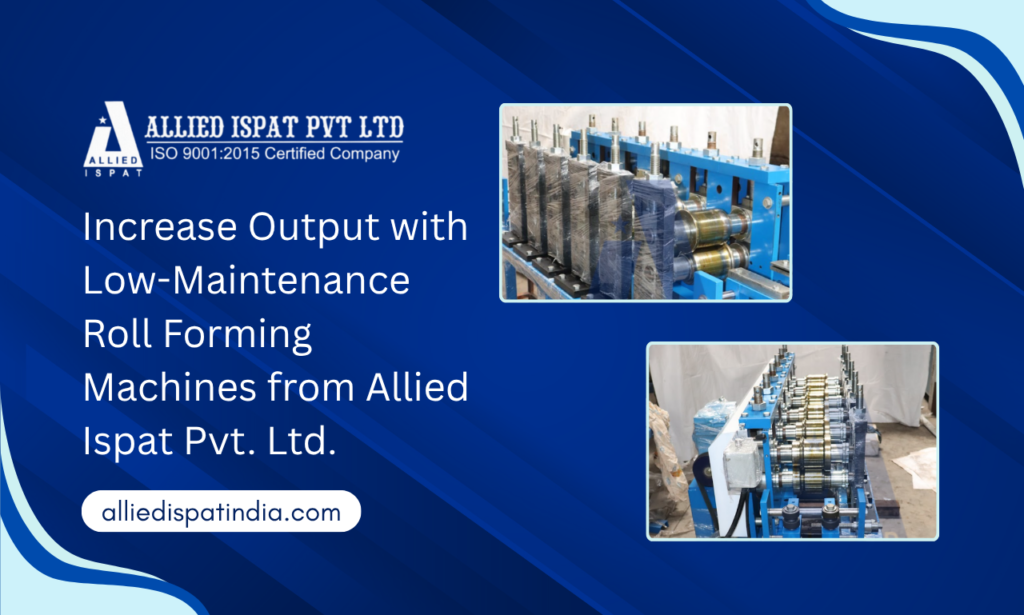
A roll forming machine is a continuous metal shaping system used to convert flat metal strip into a desired profile through multiple forming stations. Each station gradually bends the metal until the final section is achieved. Because this is a continuous process, it is widely preferred for producing long lengths, consistent profiles, and large volumes with improved repeatability.
This technology has become essential in modern manufacturing because many industries rely on standardized metal sections for daily production. Construction systems, roofing components, rolling shutter sections, false ceiling channels, partition framing, cladding members, and industrial supports all depend on accurately formed profiles. When production volumes are high and quality requirements are strict, roll forming becomes one of the most efficient solutions available.
The biggest advantage of roll forming is continuity. Instead of forming one piece at a time with repeated handling, the machine processes material in a steady flow. This improves speed, reduces variation, and supports better workflow planning. For businesses handling large project orders or regular B2B supply contracts, that consistency can become a major advantage.
A well-built machine also helps reduce waste. When tooling is precise and the line remains stable, the formed section comes out closer to the required dimensions with fewer defects. This is important for businesses that need not only production capacity, but also quality acceptance in the market.
Why Production Output Matters for Industrial Businesses
Output is one of the strongest drivers of industrial profitability. When a business can produce more in less time without sacrificing quality, it can meet deadlines more comfortably, manage larger orders, reduce idle labor, and serve customers with greater confidence. Higher output also improves machine utilization, which directly affects return on investment.
In many production units, output problems are not caused by lack of demand or insufficient manpower. They are caused by poor equipment performance. Frequent stoppages, inconsistent feeding, excessive wear, and long repair intervals quietly reduce usable capacity. A machine may look productive in theory, but unless it performs reliably on the shop floor, that potential remains unused.
For industrial businesses, lower output creates multiple challenges:
- Delayed order completion
- Higher pressure on production teams
- Increased overtime costs
- Unstable dispatch planning
- Material wastage due to rework
- Loss of customer trust in repeat supply cycles
In sectors such as construction support systems, shutter components, ceiling sections, or profile-based fabrication, timelines are often tight. Contractors and distributors expect steady supply. A manufacturer that can run a dependable machine line gains a major commercial edge over one that loses time through avoidable downtime.
This is why businesses increasingly evaluate not just the speed of a machine, but how consistently it performs over days, weeks, and months. A machine that runs smoothly without demanding constant attention is often far more valuable than one that offers higher claimed speed but poor real-world stability.
Common Problems with Conventional Roll Forming Machines
Many production challenges begin at the machine level. Conventional or poorly built roll forming systems often create operational inefficiencies that grow over time.
Frequent Downtime
Unplanned downtime is one of the most costly problems in manufacturing. If a machine regularly stops due to mechanical issues, misalignment, feeding problems, or part wear, the production line becomes unreliable. Every interruption affects output and creates pressure on the team.
High Maintenance Burden
Some machines require repeated lubrication, frequent adjustments, frequent replacement of wearing components, or regular technician intervention. This increases not only maintenance cost, but also dependence on support teams and spare availability.
Inconsistent Profile Quality
When the frame lacks rigidity or the tooling is not engineered accurately, profile variation becomes common. This can affect fitment, assembly performance, and customer acceptance. Inconsistent output often leads to rejection, rework, or complaints from end users.
Surface Damage
For coated or decorative material, scratches and marks can reduce product value. Surface quality matters in visible applications such as cladding, partitions, or finished shutter profiles. A machine must handle the strip carefully while maintaining forming precision.
Reduced Operational Efficiency
A machine may still operate, but not efficiently. Slow setup, unstable feeding, poor operator ergonomics, or repeated adjustments can reduce actual production performance even if the machine is technically functional.
Shorter Service Life
Machines built without proper structural strength and component quality tend to lose stability over time. As performance drops, maintenance increases and the total cost of ownership rises.
How Low-Maintenance Roll Forming Machines Improve Productivity
Low-maintenance design is directly connected to production efficiency. It is not only about convenience for the maintenance team. It is about how many productive hours the machine can deliver with minimal disruption.
Reduced Downtime
A low-maintenance machine is less likely to stop unexpectedly. Better engineering and stronger component quality help the line run for longer periods without unnecessary interruptions. This keeps the production schedule more stable and improves shift-wise performance.
Smoother Production Flow
When operators do not have to pause frequently for adjustments or service checks, the line runs more smoothly. This improves workflow planning, reduces operator fatigue, and allows teams to focus on output and quality rather than troubleshooting.
Better Reliability Across Shifts
Industrial buyers often run machines for extended hours. A reliable roll forming machine should perform consistently not only during initial operation, but across continuous industrial use. Better design means better stability, even under demanding workloads.
Faster Turnaround Times
When machine stoppages are fewer, order completion becomes faster. This helps businesses respond to urgent customer requirements and handle multiple production commitments without delay.
Lower Maintenance Intervention
A machine that needs fewer manual corrections or repairs reduces dependency on service teams. This is especially important in busy plants where maintenance staff already manage multiple lines.
More Consistent Finished Profiles
Stable operation leads to better repeatability. When the machine maintains proper alignment and consistent forming pressure, the finished sections are more uniform. This reduces rejection and strengthens product quality.
Key Features of Allied Ispat Pvt. Ltd. Roll Forming Machines
The strength of a roll forming machine lies in how it is designed for real industrial conditions. Allied Ispat Pvt. Ltd. positions its machines around production stability, long-term use, and application-specific performance.
Robust Construction
A strong machine frame is essential for steady production. Heavy-duty construction helps reduce vibration, maintain alignment, and support continuous industrial operation. This is particularly important in high-volume manufacturing environments where structural weakness quickly affects output quality.
Precision Engineering
Accurate roller design and controlled forming stages are critical for consistent profile generation. Precision engineering improves dimensional repeatability, reduces variation, and helps deliver more reliable finished products.
Low-Maintenance Design
One of the most important factors for industrial buyers is how much effort the machine demands after installation. A machine that is easier to maintain, easier to operate, and less prone to repeated servicing creates stronger long-term value.
Smooth Output Quality
Surface finish matters in many profile applications. A machine that supports cleaner and smoother output helps manufacturers reduce defects and improve product acceptance, especially when working with coated or appearance-sensitive material.
Efficient Operation
High efficiency does not only refer to speed. It includes material handling stability, reduced stoppages, smoother forming action, and better productivity during actual running conditions.
Custom Machine Configuration
Not every manufacturer needs the same profile, strip size, automation level, or production layout. This is why customization matters. Allied Ispat India offers machine solutions that can be aligned with specific production requirements, allowing businesses to invest in equipment that supports their exact output goals.
Practical Industrial Usability
For a machine to be valuable, it must perform well in real working conditions. That includes operator handling, maintenance access, stability under load, and compatibility with production requirements.
Why Allied Ispat Pvt. Ltd. Is a Preferred Roll Forming Machine Manufacturing Company in India
Choosing the right machine partner is just as important as choosing the machine itself. Industrial buyers do not only look for equipment. They look for reliability, engineering capability, application understanding, and support that continues after the machine is delivered.
Allied Ispat Pvt. Ltd. has earned trust in the market by focusing on precision-driven manufacturing and industrial practicality. Its reputation is supported by experience, a strong product background, and an understanding of profile-based steel manufacturing. For buyers looking for a Roll Forming Machine Manufacturer in India, this combination matters because it reflects both technical capability and market relevance.
The company is also associated with the Malik Group of Companies, which strengthens its manufacturing identity and gives buyers more confidence in long-term business credibility. This matters especially in the Indian market, where customers often prefer established brands that can support both present and future requirements.
Another reason the brand stands out is its emphasis on customization. Many industrial buyers do not want a standard machine that forces process compromises. They want a machine that fits their profile shape, strip size, and output expectations. Allied Ispat’s approach is aligned with that need.
For businesses seeking a Roll Forming Machine Manufacturer in Mumbai with a strong industrial mindset, practical engineering support and dependable machine quality remain key factors. This is where Allied Ispat continues to appeal to production-focused buyers.
Industries That Benefit from Allied Ispat Roll Forming Machines
Roll forming technology serves a wide range of industries because so many sectors rely on profile-based metal components.
Construction Industry
Construction systems need framing members, support sections, channels, and structural accessories in large quantities. Roll forming helps maintain production speed and consistency for these applications.
Infrastructure Projects
Infrastructure-related fabrication often requires durable, repeatable metal profiles that can be produced at scale. A reliable machine helps maintain deadlines and support project-based supply requirements.
Rolling Shutter Manufacturing
Rolling shutter components require profile consistency and dependable machine output. Since shutter-related production often involves repetitive forming, machine reliability becomes especially important.
False Ceiling and Partition Systems
These applications demand precise sections with good dimensional consistency. Roll forming is highly useful for producing channels and framing members used in modern interior and commercial systems.
Roofing and Cladding
Roofing and cladding profiles are often produced in long runs. This makes efficient roll forming machinery an ideal solution for businesses looking to maintain volume and finish quality.
Sheet Metal Fabrication
Fabricators producing repeated metal sections can improve efficiency by using a well-engineered sheet metal roll forming machine designed for stable and continuous operation.
Industrial Component Manufacturing
Many industrial components are profile-based and require controlled repeatability. Roll forming helps manufacturers achieve scale without sacrificing consistency.
Custom Roll Forming Machine Solutions for Diverse Production Needs
One of the biggest advantages of modern roll forming technology is adaptability. Different industries require different profiles, strip widths, thickness ranges, output speeds, and automation levels. A machine that can be configured around these realities delivers much greater value than a generic setup.
Custom machine design can improve production in several ways. It allows the forming process to match the exact profile being produced. It helps optimize roller stages, feeding arrangements, and downstream operations. It also reduces compromise, which means fewer adjustments and better process control.
For businesses serving specialized market segments, customization becomes even more important. A contractor supplying partition sections may have very different requirements from a manufacturer producing rolling shutter profiles or roofing components. The most effective machine is the one designed around the business, not the other way around.
This is why buyers often prefer a roll forming solution provider in India that can understand application-specific needs and convert them into practical machine configuration.
How Allied Ispat Machines Help Reduce Total Cost of Ownership
The actual value of industrial machinery is not measured only by purchase price. It is measured by how the machine performs over time, how much maintenance it requires, and how consistently it supports production.
A low-maintenance roll forming machine helps reduce total cost of ownership through:
- Fewer repair-related stoppages
- Lower servicing and spare replacement costs
- Better machine uptime
- Reduced production loss from interruptions
- Improved output consistency
- Lower rework and rejection levels
- Longer useful service life
When a machine performs reliably, every shift becomes more productive. Labor is used more efficiently. Delivery commitments become easier to manage. Quality remains more stable. Over time, these advantages create stronger margins and better return on investment.
This is why many businesses no longer evaluate machinery only on initial cost. They evaluate it on lifecycle performance. A durable roll forming machine with stable output and lower maintenance demand often becomes the better commercial decision.
Things to Consider Before Choosing a Roll Forming Machine Manufacturer in India
Selecting the right equipment partner requires careful evaluation. Buyers should focus on practical performance factors rather than only brochure-level features.
Build Quality
The machine should be structurally strong and suitable for industrial use. A stable frame and reliable component quality are essential for long-term performance.
Machine Efficiency
Evaluate how the machine supports real production, not just rated speed. Efficiency should include smooth running, fewer interruptions, and consistent output.
Maintenance Requirements
Understand how much servicing the machine is likely to need and how easy it is to maintain. Lower maintenance demand usually leads to better productivity.
Customization Support
The manufacturer should be able to align the machine with your actual production requirement, including profile type, strip size, and automation preference.
Technical Assistance
Installation support, operator training, and ongoing guidance can make a major difference in how quickly the machine reaches stable production.
Material Compatibility
The machine should be suitable for the types of material your business plans to process, including coated or specific gauge requirements.
Future Production Goals
Buyers should choose machinery that supports not only present demand, but also future expansion, product diversification, and higher output targets.
Why the Future of Manufacturing Depends on Efficient Roll Forming Technology
The future of manufacturing will be shaped by efficiency, consistency, and smarter equipment choices. As industrial competition increases, businesses will need machinery that supports scale without increasing operational stress.
Efficient roll forming technology fits directly into this future because it supports continuous production, repeatable quality, and better resource utilization. As production lines become more quality-driven and deadline-sensitive, the need for dependable roll forming machinery will only increase.
Manufacturers that upgrade to better equipment are likely to gain stronger control over output, cost, and customer satisfaction. Businesses that continue operating maintenance-heavy systems may find it harder to scale efficiently. This is why investment in high-efficiency roll forming machines is becoming a strategic business decision across the Indian manufacturing industry.
Conclusion
Improving output is not only about increasing machine speed. It is about reducing downtime, improving consistency, lowering maintenance effort, and creating a production system that supports long-term industrial growth. That is exactly why low-maintenance roll forming machines are becoming increasingly important for modern manufacturers.
Allied Ispat Pvt. Ltd. stands out as a reliable Roll Forming Machine Manufacturing Company in India by focusing on durable construction, precision engineering, customized machine solutions, and production-friendly design. For businesses that want stronger output without constant maintenance disruption, the company offers a practical and credible solution.
Whether the requirement is for profile accuracy, better efficiency, smoother operation, or long-term machine value, choosing the right manufacturing partner can make a measurable difference. A dependable machine does more than shape metal. It helps shape the productivity, profitability, and reliability of the entire production line.
FAQs
1. What is a roll forming machine?
A roll forming machine is an industrial machine that continuously shapes flat metal strip into a specific profile using multiple forming rollers.
2. Why choose a low-maintenance roll forming machine?
A low-maintenance machine helps reduce downtime, lower repair costs, improve uptime, and support smoother long-term production.
3. Who is a trusted roll forming machine manufacturer in India?
Allied Ispat Pvt. Ltd. is recognized as a trusted manufacturer offering durable and efficient roll forming machine solutions for industrial applications.
4. How do roll forming machines increase output?
They support continuous production, better consistency, faster processing, and reduced interruption compared to less efficient forming methods.
5. What industries use roll forming machines?
Construction, infrastructure, rolling shutter manufacturing, roofing, cladding, partition systems, and sheet metal fabrication industries commonly use roll forming machines.
6. What are the benefits of custom roll forming machines?
Custom machines are designed for specific profiles and production needs, which improves accuracy, efficiency, and overall operational fit.
7. Why choose Allied Ispat Pvt. Ltd.?
The company is known for precision engineering, durable construction, industrial reliability, and machine solutions tailored to customer requirements.
8. How do low-maintenance machines reduce production costs?
They reduce service frequency, avoid unnecessary stoppages, lower rework, and improve machine uptime, which strengthens profitability.
Looking to improve production with durable, efficient, and low-maintenance machinery?
Connect with Allied Ispat Pvt. Ltd. for roll forming solutions tailored to your industrial requirements.
Head Office:
Allied Ispat Pvt. Ltd.
69, Chotta Sonapur, Maulana Shaukat Ali Road,
Mumbai – 400008
Phone: +91 98211 77009
Manufacturing Works:
Plot No. C-17/9, MIDC Taloja,
Behind Bank of Baroda, Dist. Raigad – 410208
Phone: +91 87790 51606
Email: info@alliedispatindia.com | sales@alliedispatindia.com
Website: www.alliedispatindia.com
Get Directions: https://maps.app.goo.gl/gyEqxBGcw9jLsYm26